Vintage years
Vintage years
A year in Moldova is not one thing: the north and the south of the country live through different seasons, so the only honest way to say what a vintage was like is region by region — heat, hot days and the September rain.
1980–2026
- Regions3
- Full seasons141
- SourceERA5-Land · ERA5
The latest season
2026, region by region.
- Codru: as warm as the previous ten years here; an ordinary September for rain.
- Valul lui Traian: cooler than the previous ten years here; an ordinary September for rain.
- Ștefan Vodă: cooler than the previous ten years here; an ordinary September for rain.
Compared with each region's 2016–2025 mean. Weather, not a rating of the wine.
What is season warmth?
Grapes grow and ripen only when it is warmer than 10 °C. “Season warmth” is all of that warmth added up day by day from 1 April to 31 October: a warm day adds a lot, a cool day a little, a cold day nothing. Growers call this total the Winkler index and measure it in degree-days (°C·days). The number itself says little; what matters is whether it is higher or lower than in the same region over the ten previous seasons.
How to read the numbersCodru
- usual warmthless than 5% off 2016–2025
- usual September36 mm — usually 45
- no frost
Season in numbers
- Season warmth
- 1,581 °C·daysusually 1,662
- Season mean
- 17.1 °C
- Days above 35 °C
- 0usually 0.6
- September rain
- 36 mmusually 45
- Damaging frost days
- 0
Season warmth is how much warmth the vine received from April to October. The higher the number, the warmer the season.
The region's calculation point: 47.10° N, 28.60° E, 215 m. Vineyards may lie lower or higher.
Valul lui Traian
- cooler6% less warmth than in 2016–2025
- usual September29 mm — usually 38
- no frost
Season in numbers
- Season warmth
- 1,787 °C·daysusually 1,891
- Season mean
- 18.2 °C
- Days above 35 °C
- 2usually 1.9
- September rain
- 29 mmusually 38
- Damaging frost days
- 0
Season warmth is how much warmth the vine received from April to October. The higher the number, the warmer the season.
The region's calculation point: 46.00° N, 28.40° E, 109 m. Vineyards may lie lower or higher.
Ștefan Vodă
- cooler5% less warmth than in 2016–2025
- usual September36 mm — usually 42
- no frost
Season in numbers
- Season warmth
- 1,755 °C·daysusually 1,848
- Season mean
- 18 °C
- Days above 35 °C
- 4usually 2
- September rain
- 36 mmusually 42
- Damaging frost days
- 0
Season warmth is how much warmth the vine received from April to October. The higher the number, the warmer the season.
The region's calculation point: 46.60° N, 29.30° E, 110 m. Vineyards may lie lower or higher.
Heat over the years
47 seasons on one scale.
Season warmth, year by year. The solid line is the season, the dashed line the average of the ten seasons before it. All charts share one scale, but each region is calculated at a single point, so compare years within a region rather than one region with another.
Year by year
Open a year.
Warmer or cooler than the decade before it, and how much it rained in September. Pick a year and the panel fills with the season in every region — plus whatever the catalogue actually holds for that vintage, which is often nothing.
| Year | Codru | Valul lui Traian | Ștefan Vodă | Wines |
|---|---|---|---|---|
| 2026 | −5 | −6 | −5 | 0 |
| 2025 | −5 | −4 | −3 | 30 |
| 2024 | +20 | +16 | +14 | 51 |
| 2023 | +12 | +10 | +11 | 88 |
| 2022 | −5 | +2 | −2 | 119 |
| 2021 | −20 | −18 | −20 | 91 |
| 2020 | +5 | +7 | +6 | 95 |
| 2019 | ±0 | +3 | +3 | 96 |
| 2018 | +11 | +10 | +12 | 84 |
| 2017 | −6 | −7 | −5 | 61 |
| 2016 | ±0 | −2 | −1 | 46 |
| 2015 | +11 | +7 | +9 | 30 |
| 2014 | −1 | −2 | +3 | 16 |
| 2013 | −1 | −3 | ±0 | 6 |
| 2012 | +31 | +26 | +29 | 7 |
| 2011 | +1 | −2 | +1 | 6 |
| 2010 | +2 | −2 | +2 | 3 |
| 2009 | +9 | +6 | +8 | 2 |
| 2008 | −2 | +3 | −2 | 0 |
| 2007 | +23 | +22 | +21 | 1 |
| 2006 | +2 | +2 | +1 | 1 |
| 2005 | +3 | +4 | +7 | 2 |
| 2004 | −7 | −5 | −6 | 0 |
| 2003 | +10 | +10 | +9 | 0 |
| 2002 | +9 | +8 | +9 | 1 |
| 2001 | +7 | +8 | +6 | 1 |
| 2000 | +9 | +12 | +8 | 0 |
| 1999 | +15 | +11 | +12 | 2 |
| 1998 | +3 | +7 | +7 | 0 |
| 1997 | −11 | −10 | −10 | 0 |
| 1996 | −2 | −1 | −1 | 0 |
| 1995 | −2 | ±0 | +1 | 0 |
| 1994 | +21 | +19 | +19 | 3 |
| 1993 | −5 | −2 | −2 | 3 |
| 1992 | +2 | +1 | +3 | 0 |
| 1991 | −4 | −4 | −2 | 0 |
| 1990 | +5 | +6 | +4 | 3 |
| 1989 | +5 | +3 | +5 | 2 |
| 1988 | +3 | +4 | +5 | 3 |
| 1987 | — | — | — | 2 |
| 1986 | — | — | — | 4 |
| 1985 | — | — | — | 1 |
| 1984 | — | — | — | 1 |
| 1983 | — | — | — | 1 |
| 1982 | — | — | — | 1 |
| 1981 | — | — | — | 1 |
| 1980 | — | — | — | 1 |
Numbers are percentages against the previous ten full seasons. A dash means there are fewer than eight of them to compare with — we would rather show a gap than a comparison we cannot make. The corner mark is a damaging spring frost; the last column is how many wines of the year the catalogue holds.
2002
season complete- Codru1,508 °C·days16.5 °C+9% heat0 hot days43 mm · norm 65decade 1,379
- Valul lui Traian1,740 °C·days17.8 °C+8% heat2 hot days26 mm · norm 49decade 1,604
- Ștefan Vodă1,674 °C·days17.4 °C+9% heat1 hot days42 mm · norm 57decade 1,539
What the catalogue holds for 2002
1 wine of 2002 in the catalogue
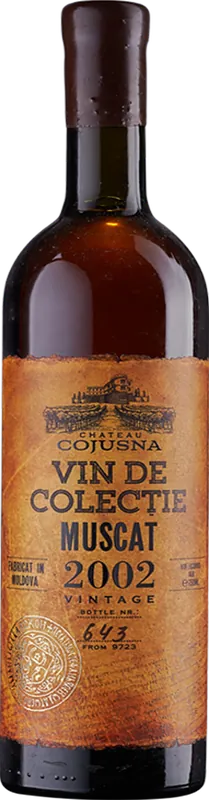
Vintages are producer declarations. A year we hold for one bottling says nothing about the rest of the range.
Reading the numbers
What a season does to a berry.
None of these numbers is a score. They describe the weather the fruit grew in, and the winemaker's answer to it is a separate story — which is why the guide never prints a single “great vintage”.
Season warmth
The total warmth the vine received from 1 April to 31 October. Below 10 °C a vine barely grows, so only what is above counts: a day averaging 18 °C adds 8, a day colder than 10 °C adds nothing. The season's total is measured in degree-days (°C·days) and is known as the Winkler index. The coolest wine-growing climates collect fewer than 1,400 °C·days and the hottest more than 2,200, but it is more reliable to compare one year with another in the same region: a difference of less than 5% from the average of the ten previous seasons is what we call “as usual”. More warmth means riper fruit: higher sugar and eventual alcohol, lower acidity, softer tannin; a cool year keeps more acidity, and in late-ripening varieties the tannin can stay firm. Each region is calculated at a single point: a slope 300 metres lower gets noticeably more warmth, so the number is good for comparing years and poor for comparing regions.
Days above 35 °C
Days above 35 °C are the other side of warmth. In that heat the vine closes its stomata and ripening stalls, berries get sunburn and aromatics are lost: a hot year is not the same as a warm one.
September rain
September rain falls in the harvest month of many zones. Water before picking dilutes the juice and thins concentration, while damp starts grey rot; the winery has to choose between ripeness and healthy fruit. For wine fermented on the skins it matters twice over: damaged skins end up in the bottle.
Spring frost
Spring frosts (a minimum of −2 °C or lower after 10 April) hit young shoots. The crop comes out smaller and the second flush ripens unevenly — this is about how much wine there is and how uneven the lot is, not about its taste. The threshold is deliberately strict: a night at zero in early April is a common event and does no harm to buds that have not yet opened.
What the numbers do not say
These are general facts of viticulture, not our conclusions about these wines: the same weather ends differently at a winery that sorted its fruit and at one that picked everything.
Sources
Where these series come from.
ERA5-Land and ERA5 reanalyses, Copernicus
Temperatures from ERA5-Land, a grid of about 0.1°; precipitation from ERA5, a coarser grid. A gridded model, not weather stations in the vineyards.
Contains modified Copernicus Climate Change Service information 2026. Processed: daily values, elevation adjustment. Licence CC BY 4.0. How the weather is computed
One grid cell per region
Each region is computed at a single representative point, not as an average of its appellations. The card shows the cell's coordinates and elevation, which can differ from the vineyards'.
Season window
April 1 to October 31. A year is compared with the mean of the previous ten full seasons, provided there are at least eight of them.
About these numbers
A season that has not finished is marked as incomplete and is not compared: a full season is 214 days. A damaging frost is a minimum of −2 °C or lower between 10 April and 31 May — a night at zero in early April is common and does no harm to buds that have not opened.
Years are compared with the previous ten, not with the 1991–2020 climate normal: against that normal most recent years would read as warmer than usual — true about warming, but not about the year.